Archive · War Reports
Skopje, 2001–2004
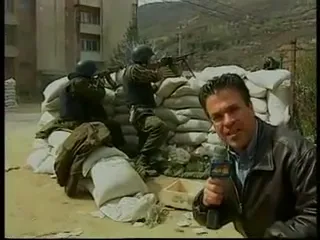
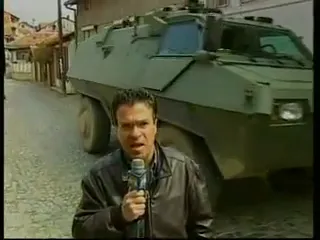
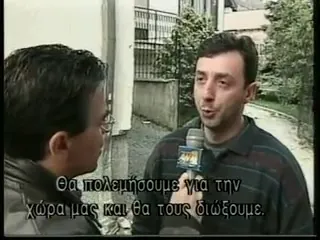
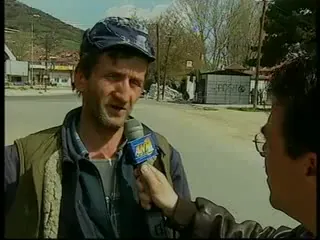
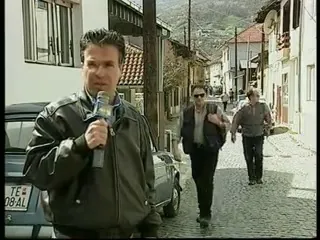
At the centre of this dossier is the report Argyris Dinopoulos filed for Antenna (ANT1) from the armed clashes between Slavs and Albanians in Tetovo in March 2001, in what is today North Macedonia.
It also carries a second, separate subject: his 2004 documentary on the Greek political refugees of the Greek Civil War, Greek history rather than an episode of the Yugoslav wars.
From the early 1990s Argyris Dinopoulos covered the events that unfolded in what was then the Socialist Republic of Macedonia, which led to its secession from the Yugoslav Federation and to the creation of the independent state of «Macedonia», which subsequently acquired the international name FYROM.
In this post-communist course of the country neighbouring Greece, the dispute between the Albanian population and the Slavs was a dominant element, which culminated in the dramatic armed clashes in Tetovo in March 2001, which Argyris Dinopoulos covered for Antenna.
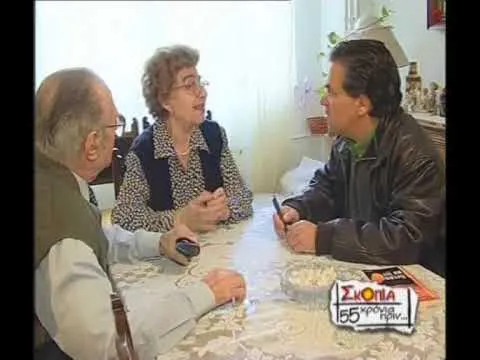
In 2004, in a documentary titled «Skopje, memories of the civil war», he recorded the testimony (now in advanced age) of children, and also of political refugees of the Greek civil war as well as fighters of the Democratic Army, who at the end of the dramatic 1940s took refuge in the countries of what was then «actually existing socialism»